• Do you need help identifying a 🌶️?
    Is your plant suffering from an unknown issue? 🤧
    Then ask in Identification and Diagnosis.
  • ✅ Expert and friendly hot pepper grow advice.
    ✅ The latest information on hot pepper varieties.
    ✅ Reliable seed trading.
    ✅ Hot sauce recipes and food safety guidance.
    ✅ Hot sauce business tips for startups.
    🌶️ And more!
    It's all here, at The Hot Pepper! The Internet's original hot pepper community! Est. 2004.

pepper-talk Florida Wild = Calusa Indian Mound = Grove Pepper

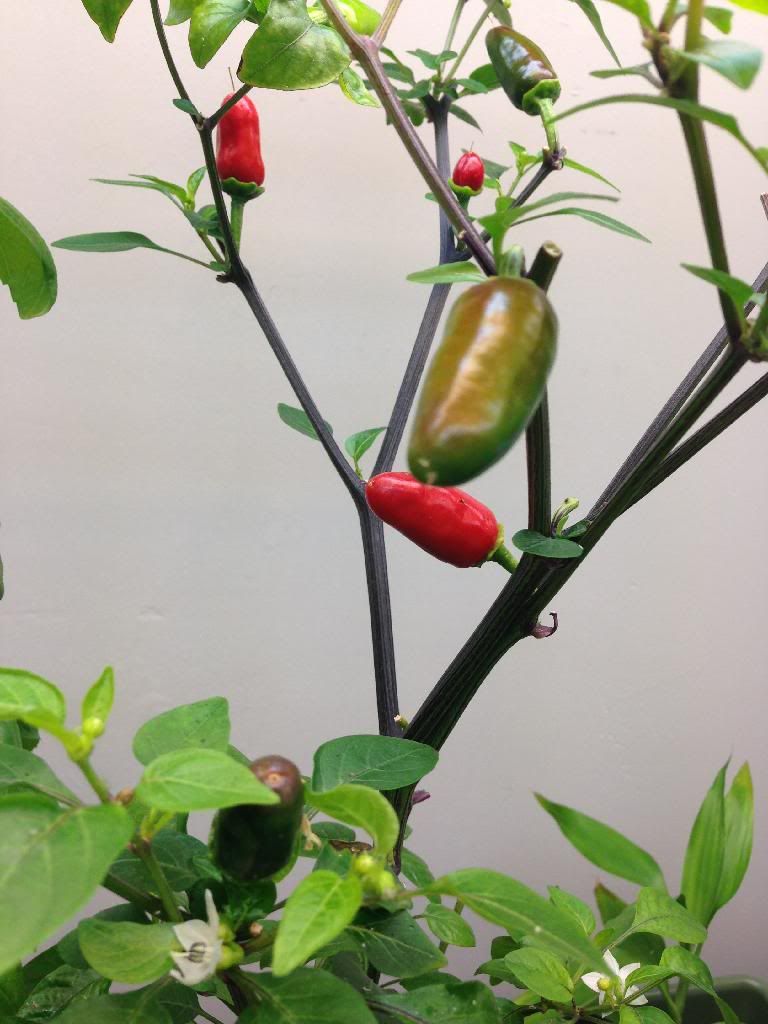
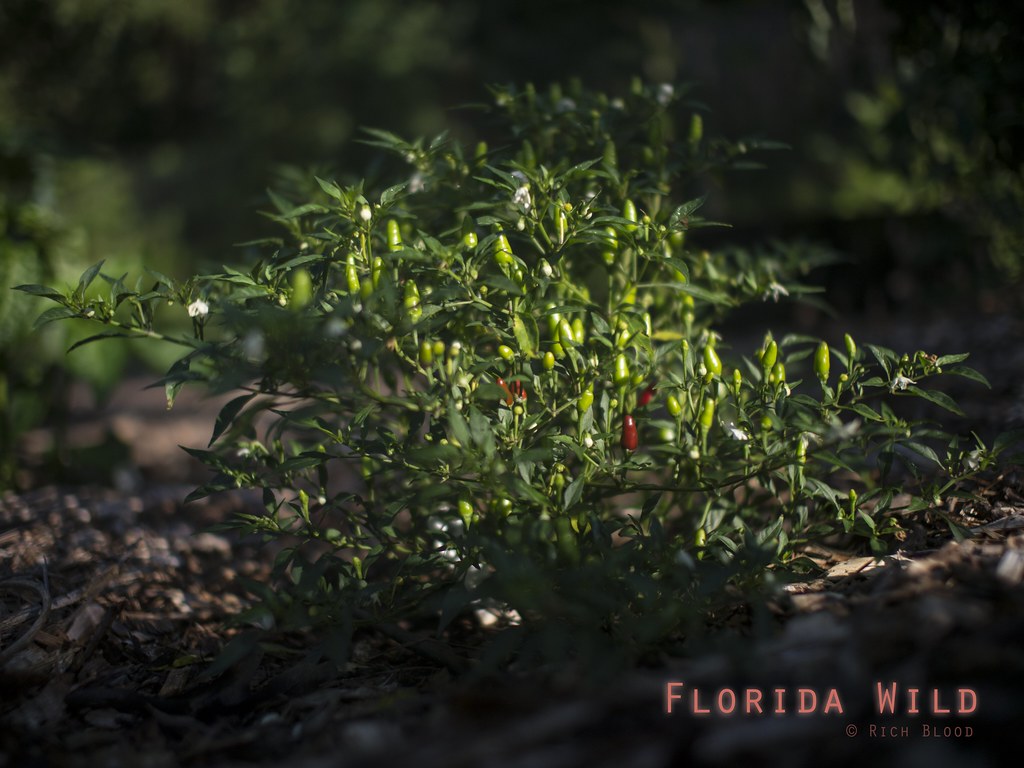
My Florida Wild is no more.... last night a gust of wind knocked it right over against a toy car my daughter had been playing with, whatever angle it fell at, it snapped it in half. She was a lovely plant... which produced a heck of a lot of pods for me. A very interesting grow for those who don't mind spending hours and hours picking pods off one bloody plant! :)

Thanks again to RedTailForester for sending me the seeds last summer.
 
Sorry to hear about your loss but I'm happy you were finally able to enjoy some pods from it. Just gives you all the more reason to grow another one!
 
It was my first loss of the season so I can't complain. I think the rest of them will make it! I only have another 3 weeks of growing anyway.
 
I would very much appreciate if someone would like to donate some seeds to me. I have a perfect spot for a couple of these and would love to see how it flourishs in FL.
 
Spicegeist said:
Another thing I noticed about this plant and I see Saugapepper's also displays, slight hairy undersides of the leaves:
floridawild5272.jpg
Do your plants display this characteristic as well?
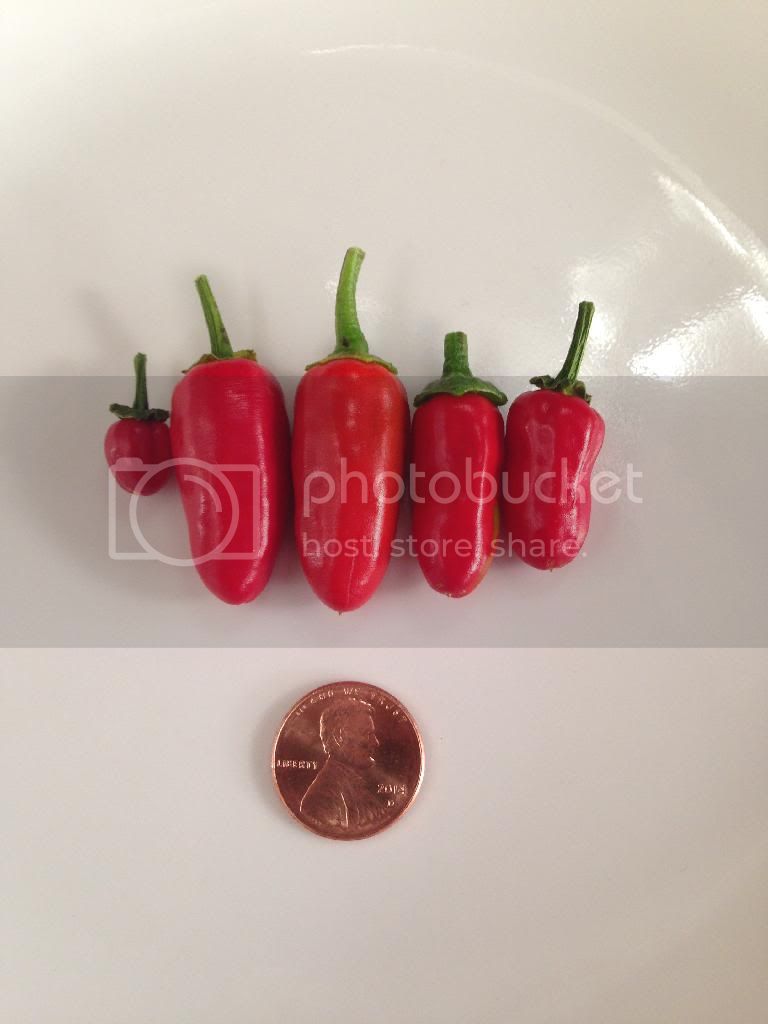
What type of pepper plant is this? I have seen several pics that look like my plant too. I'm looking for a name.

181756BE-9061-4E93-880F-40364C07F071_zpsudisvfrt.jpg


EA04C7B7-B29A-43D8-A35D-3F9A3A6F6EF6_zps627e1qfc.jpg


http://thehotpepper.com/topic/44824-mystery-hot-pepperhelp/

Good looking plant you have there.
 
You know, I live in florida... I love being outdoors... I hunt, fish, camp... I spend several weeks in the keys nearly every year...

I've never ever seen a wild pepper plant.

I'm starting some florida wild though. If it takes off like crazy, maybe I'll plant some pods in the woods where I camp etc - and in the keys...

Could be fun http://www.thehotpepper.com/public/style_emoticons/#EMO_DIR#/icon_mrgreen.gif


Ditto
I've lived in FL for 24 years. Fish and camp, don't hunt. Never seen a wild pepper plant.
I've tried to germinate two years in a row. No luck:(
Nice leaves/plant
 
glabriusculum means "little hairless" or something similar so I dont think the OP's image is an accurate species.

Native range of C. annuum var. glabriusculum


Florida Range


Capsicum_annuum_glab.jpg


Capsicum_annuum_glab4.jpg


Capsicum_annuum_glab6.jpg
Reviving this old thread. Even in this post from thegreenman, we can see that even people documenting a cultivar (in this case Keith Bradley) tend to get some ID's wrong. The first two being accurate as C. annuum var glab but the third photo labeled C annuum var glab is actually a photo of a C frutescens. Evident by the fruit constriction at the base where it emerges from the calyx, calyx constriction at fruit maturation, and flower morphology with those green pigments in the petals. Great thread.
 
Last edited:
Here is a side by side comparison of:

• Calusa Indian Mound (aka Florida Wild Bird) Capsicum annuum var. glabrisculum

• Grove Pepper Capsicum Frutescens

My grandfather briefly grew Grove Peppers here in central Florida when I was younger. From my recollection and understanding, they’re about twice as hot as Tobasco, both C. Frutescens. Although very similar in appearance, they are 2 different peppers. I’m sure down the line hundreds if not thousands of years ago they shared the same parents. And that their environment slightly changed them throughout time as any isolated species would.

I’ve acquired Grove Pepper seeds from multiple sources (all local) that I will be growing out. As far as Florida Wild Bird, I have not see anyone here growing them. I will be starting some seeds this weekend and anticipate helping them spread around my Central Florida home. Will be back here in a few months with a nice side-by-side comparison of the two, from my own plants.
 

Attachments

  • IMG_9044.jpeg
    IMG_9044.jpeg
    123.3 KB · Views: 22
  • IMG_9043.jpeg
    IMG_9043.jpeg
    327.3 KB · Views: 23
  • IMG_9040.jpeg
    IMG_9040.jpeg
    397.4 KB · Views: 19
  • IMG_9039.jpeg
    IMG_9039.jpeg
    389 KB · Views: 21
Last edited:
Here is a side by side comparison of:

• Calusa Indian Mound (aka Florida Wild Bird) Capsicum annuum var. glabrisculum

• Grove Pepper Capsicum Frutescens

My grandfather briefly grew Grove Peppers here in central Florida when I was younger. From my recollection and understanding, they’re about twice as hot as Tobasco, both C. Frutescens. Although very similar in appearance, they are 2 different peppers. I’m sure down the line hundreds if not thousands of years ago they shared the same parents. And that their environment slightly changed them throughout time as any isolated species would.

I’ve acquired Grove Pepper seeds from multiple sources (all local) that I will be growing out. As far as Florida Wild Bird, I have not see anyone here growing them. I will be starting some seeds this weekend and anticipate helping them spread around my Central Florida home. Will be back here in a few months with a nice side-by-side comparison of the two, from my own plants.

Yep. Sounds about right. Ask me how many touts in the Belen Market in Iquitos tried showing me “Pipi de mono” and each time it was a different species, so long as it was small, conical, hot and red.

Same with across all of South America. There are Aji Criollo of both bac and chin depending on which village and side of the Andes you’re on. Hell, some are interspecific hybrids of C chin x C bac. One town hears the name of something before them and so on and so forth.

Will we ever know which species the first mention of Aji Criollo was meant for?

Not to throw another wrench in here…but there are also wild, round, pure frutescens (or at least heavily frutescens dominant interspecifics)

But yeah, I think you’re probably right.

Grove = frut
Mound = glab
Florida Wild = mixed to high hell good luck.
 
Here's a semi unrelated question. have you gotten your hands on Haitian Goat Pepper - Piman Bouk? I have had several friends go to Haiti on several occasions and they've never managed to get any seeds back to me.
 
Last edited:
Here's a semi unrelated question. have you gotten your hands on Haitian Bird Pepper - Piman Bouk? I have had several friends go to Haiti on several occasions and they've never managed to get any seeds back to me.
I do not. I also cannot find anything online about this variety. Do you have any photo examples?
 
Last edited:
I do not. I also cannot find anything online about this variety. Do you have any photo examples?
Nothing definite, it seems the name is used for a pickled pepper dish called Piman Bouk as well as the pepper itself, which may or may not be a habanero or scotch bonnet. My Haitian friends swear it is a real variety, but I'm doubtful. It has achieved mythical status for me because I've been trying to get my hands on it for 20 years, but it never materializes.

Oh to correct my earlier mistake Piman Bouk is Haitian Goat Pepper, Piman Zwazo is Haitian Bird Pepper.
 
Last edited:
If you look at the Accessions of C.frutescens,C.annuum and species in the USDA you will see many red flags and obvious errors. Even heroes of mine like Bob Jarrett have gotten many wrong. Chile taxonomy is horrendous and old science dies hard. This is coming from someone with a room temperature IQ. A huge portion of our plants in herbaria are dried specimens. And often times the collections were bags of material lumped together.


Edit: I feel I should say that the reason I mention this is from chats with W.H. Eshbaugh and Michael Nee. Both admitted to me they had trouble distinguishing between C.annuum,C.frutescens. Often times it was a bag filled with mixed materials,or just fruits. And then trying to ID from dried material.🙄

How easily these cross with each other exacerbates things. There are tons of annuums that look like multiple fruits per node but if you go in with a lens you will always see vegetative growth between them. The nodes of true frutescens are completely smooth with the only growth being their pedicels or the scars from fallen fruits .

Now add in the wild species of annuums named at the variatel level that are super whores for fruts and annuums mixing it up in our gardens and giving annuum hybrids a frutescens vibe. And the pequin and tepin dilemma !!Generic names always make it much harder for people to agree.
 
Last edited:
Update:
Florida Wild Bird (C. annuum var. glab.)

Here is a plant I acquired locally (Central Florida) a few weeks ago from someone who specializes in native Florida plants. Been liquid feeding it with some homemade fish hydrolysate (first year making my own) and the leaves have darkened up real nice.
 

Attachments

  • IMG_0149.jpeg
    IMG_0149.jpeg
    346.3 KB · Views: 15
  • IMG_0172.jpeg
    IMG_0172.jpeg
    471.6 KB · Views: 15
Back
Top