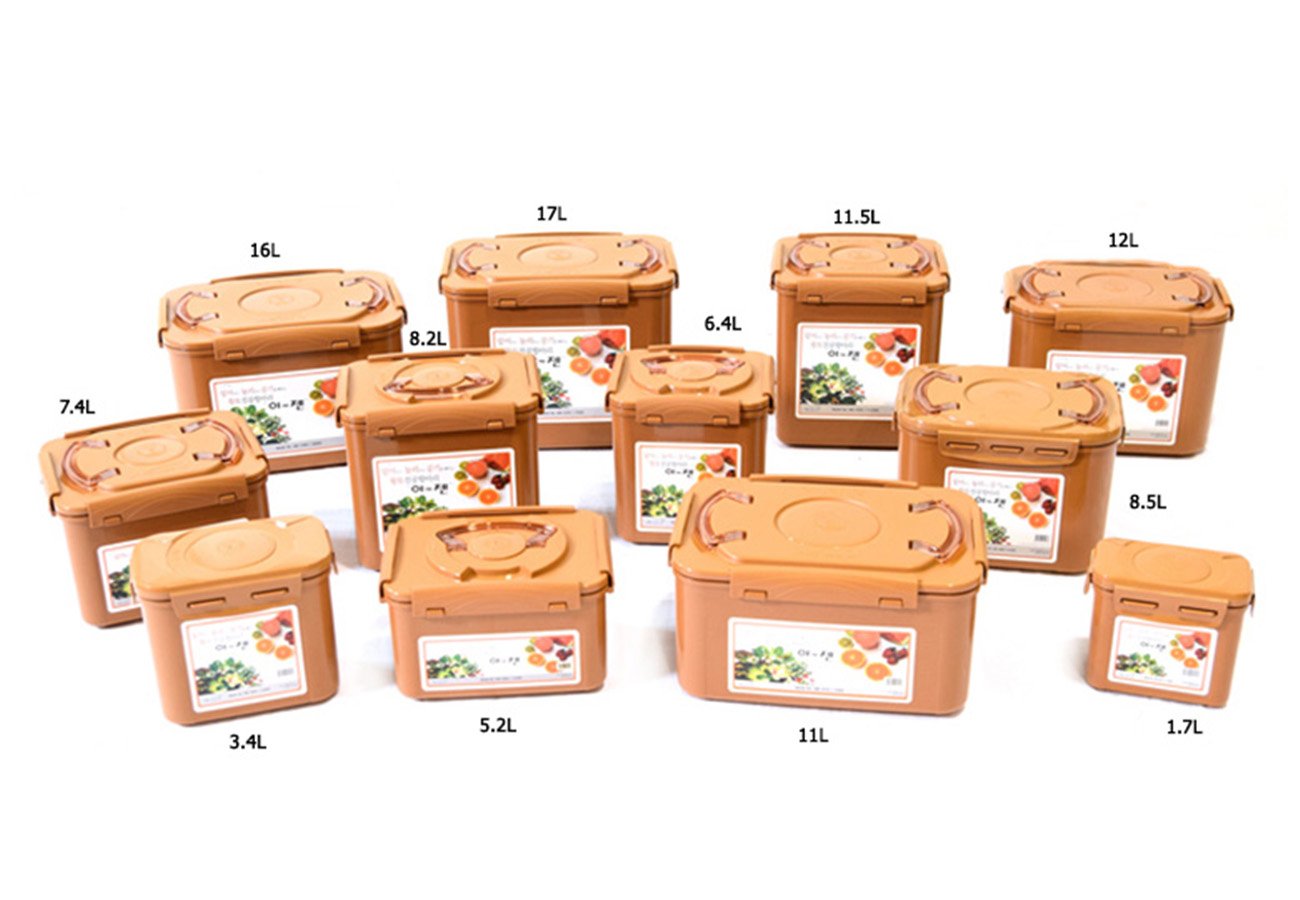
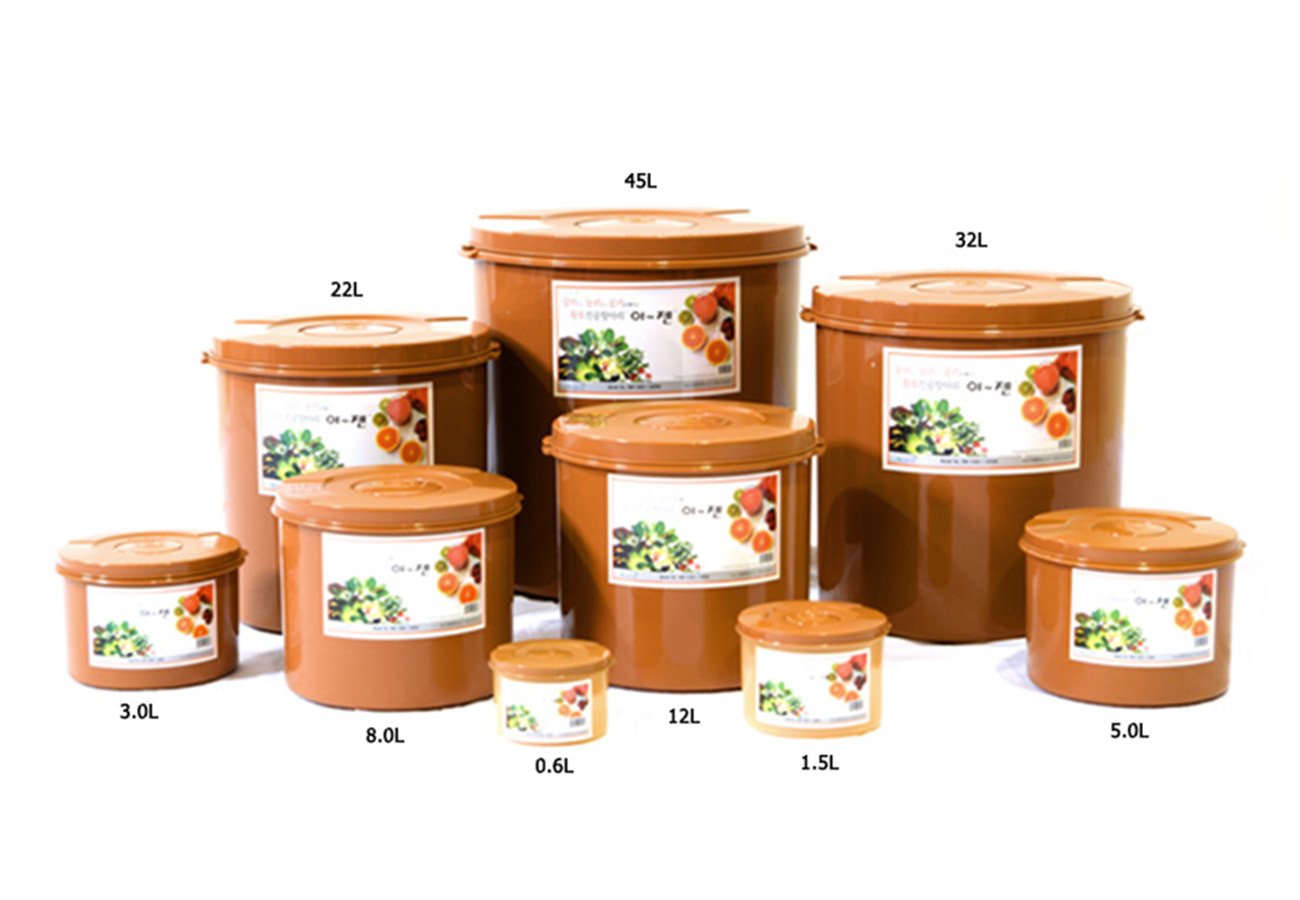
Actually, the main reason for asking the qtn is whether there would be any chemical reaction btwn the Plastic & Brine solution ( during the Fermentation process ) ?
If you use the right plastic then "they" say its ok. I would use glass, but I'm sure we have all ate plenty of bpa and whatever other chemicals. If you use plastic and have good results you could always upgrade to glass.
I have fermented in both glass & plastic. Food grade plastic is fine imo, as most of my ferments are 3-6 weeks. For anything I'm planning to let ride longer than that I use glass just in case.
Ceramic crocks are also widely used, depends on how big a batch you want to do. The Asians still use ceramic crocks and are widely available at Asian markets.
Generally speaking I prefer the "better safe than sorry," approach and go with wide-mouth mason jars. If you standardize how you do things, with standard size jars, it makes it easier to swap lids, airlocks, glass-weights, and the like. They might be more expensive than plastic, but I'm also more comfortable boiling the ever-living-hell out of the things to make sure they're sterilized.